


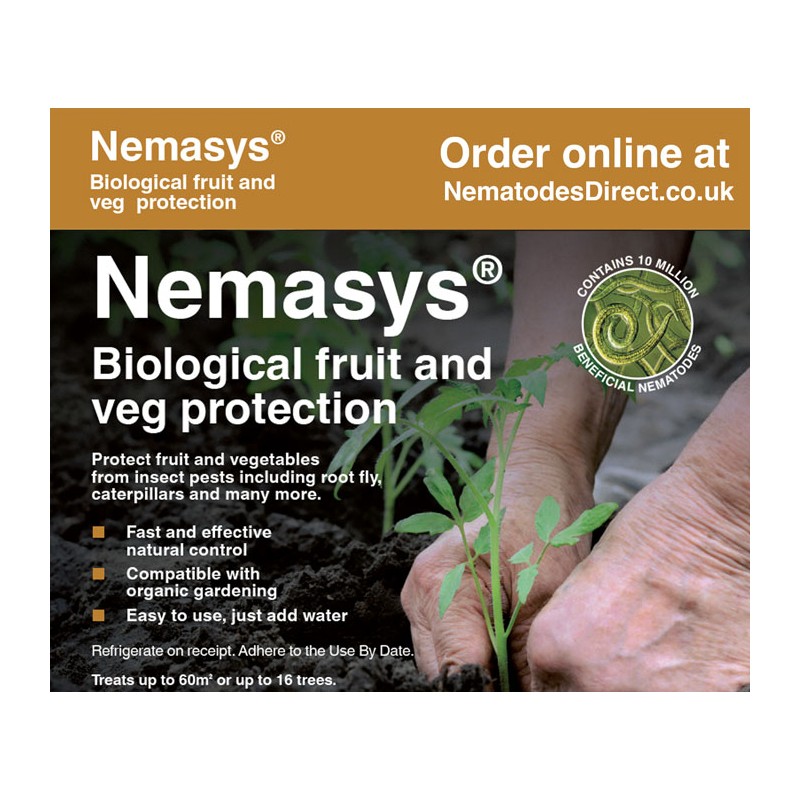


Wireworm Nematodes - 60 Sq.M
The organic Wireworm control solution that's environmentally friendly and safe for children, pets and wildlife - for smaller gardens.
Wireworm nematodes are a natural biological control for the larvae of click beetles, helping to protect roots, tubers and young plants below the soil surface.
At a glance
- The nematodes target wireworm larvae
- Contains a Steinernema Nematodes Mix (S.Feltiae/S.Carpocapsae) - 10 million of each species.
- Apply from May onwards
- Apply at least 5 days before planting susceptible vegetables
- Minimum soil temperature 10°C
- Safe for children, pets and wildlife
What are wireworm nematodes?
Wireworm nematodes contain a Steinernema nematodes mix (Steinernema Feltiae & Steinernema Carpocapsae) and are used to target the larval stage of click beetles, commonly known as wireworms and are designed for application to the soil, where wireworms live and feed.
How do I identify wireworms?
Wireworms are the larvae of click beetles. They are usually slender, firm-bodied and yellow to golden-brown, with a segmented appearance and three pairs of small legs close to the head. Mature larvae can reach around 25mm in length.
You may not always see the larvae themselves, but the damage is often easier to spot. Common signs include small holes in potatoes, carrots or beetroot, tunnelling through tubers and roots, patchy establishment, weakened seedlings and poor plant vigour where the roots have been fed on.
Wireworm damage can lead to stunted plant growth, reduced yields and vegetables that are less appetising because of holes, tunnels and surface scarring. Damaged produce may also be more prone to rots, making it less suitable for storage.
When are wireworms most likely to be a problem?
Wireworms are often more troublesome where grassy ground has recently been turned into vegetable beds, as click beetles are strongly associated with grassland and grass-based areas.
Wireworms live in the soil and feed below ground, where they can attack roots, seedlings, tubers and other underground plant parts. They are a recognised pest of vegetables such as potatoes, carrots and beetroot, and they have also been known to damage the roots of grass, which can result in patchy lawns.
The larvae can remain in the soil for 3 to 5 years and may burrow quite deeply. During that time they feed underground, which is one reason they can be difficult to manage once established.
Treat throughout the summer to target the newly hatched larvae. For best results, apply from May onwards, ideally at least 5 days before planting susceptible vegetables.
Storage guidance
Nematodes should be stored as soon as possible after delivery. Keep them in a refrigerator, or below 5°C, until the expiry date shown on the pack. Do not freeze them and do not leave them exposed to warm conditions. Once mixed with water, the stock solution should be used within 4 hours.
Application guidance
Apply when the soil temperature is at least 10°C. The soil should already be moist before treatment and should be kept moist for 3 to 4 weeks afterwards so the nematodes can remain active in the root zone.
For best results, apply in the evening, during dull weather or when light rain is expected. Water the treated area immediately afterwards. If applying over foliage, wash the nematodes off the leaves and back into the soil within 30 minutes.
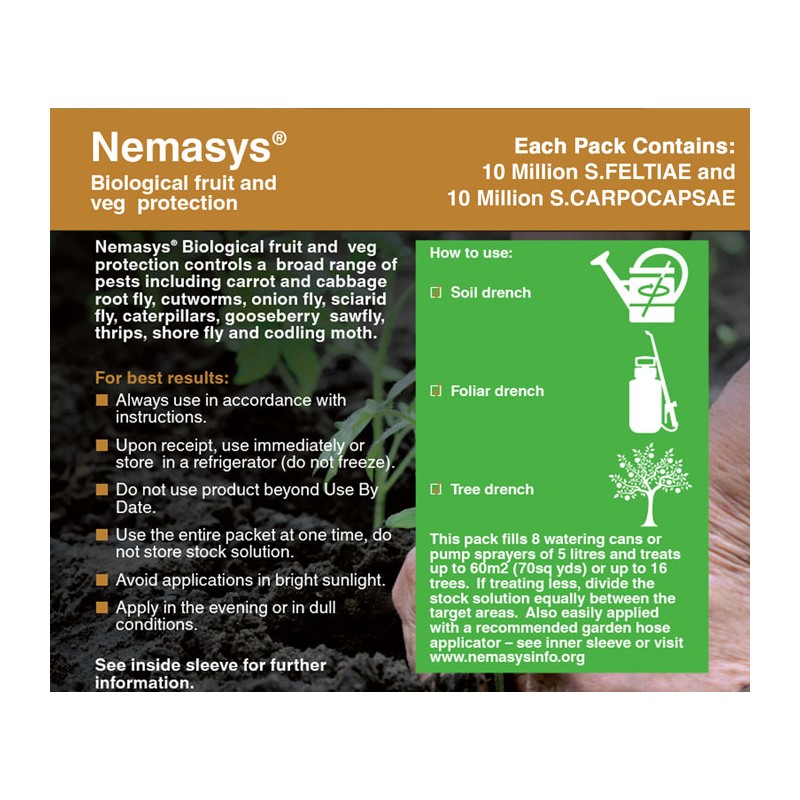
You can apply using a watering can fitted with a coarse 1.4mm rose, or with a suitable sprayer. If using a sprayer, remove any filters finer than 1.4mm, use nozzles of at least 0.5mm and do not exceed 5 bar pressure. You can also apply using a hose end feeder.
Use the whole pack to make a stock solution in 6 litres of water, stirring continuously. Then take 0.5 litres of that stock solution and dilute it with 4.5 litres of water before applying evenly to the soil surface around the plants. Repeat until all stock solution has been used, then water the area again.
Tips for best results
Apply to moist soil and avoid letting the ground dry out after treatment, as nematodes need moisture to move through the soil and find their target.
Focus on areas where wireworm damage has already been seen, especially beds used for potatoes, carrots, beetroot and other susceptible crops.
Ground that has recently been converted from lawn or rough grass is more likely to harbour wireworms, so it makes sense to be especially vigilant in newly cultivated plots.
Where possible, apply ahead of planting vulnerable crops so the nematodes are already active in the soil when young larvae are present. Because wireworms live below the surface for several years, repeated seasonal management can be helpful where pressure is known to be high.